
Uncategorized
How Is K2 (Spice) Different From THC Products? A Complete Comparison
Jul
Table of Contents
People often use “K2” and “weed” almost interchangeably, as if K2 were just a stronger or sketchier version of marijuana. It isn’t. Despite sharing a nickname — “synthetic marijuana” — K2 (also called Spice) and actual THC products come from entirely different worlds: one is a plant compound humans have used for thousands of years, and the other is a lab-engineered chemical cocktail that happens to target the same part of the brain. Understanding exactly where they diverge matters, because the differences aren’t cosmetic — they explain why K2 is so much more dangerous, so much harder to test for, and so much less predictable than natural cannabis.
Start With the Basics: What Are We Actually Comparing?
THC (delta-9-tetrahydrocannabinol) is the primary psychoactive compound found naturally in the cannabis plant. It’s one of over a hundred cannabinoids the plant produces, alongside CBD and various minor cannabinoids, and it’s responsible for most of the “high” people associate with marijuana. Whether it’s consumed as flower, vape oil, edibles, tinctures, or concentrates, THC products are — at their core — derived from a plant.
K2/Spice, by contrast, refers to a broad and constantly shifting category of synthetic cannabinoids: laboratory-synthesized chemicals that were never part of the cannabis plant at all. As a government health resource explains, <cite index=”12-1″>these chemicals are called cannabinoids because they act on the same brain cell receptors as THC, but the hundreds of known synthetic cannabinoid chemicals and THC are different chemicals, and synthetic cannabinoids may affect the brain in different and unpredictable ways compared to marijuana.</cite>
So right from the outset, the comparison isn’t “natural weed vs. a synthetic version of weed.” It’s closer to “a plant compound vs. an entirely different class of manufactured drug that happens to target the same receptors.”
Chemical Structure: Related in Function, Not in Form
This is probably the single most important — and most misunderstood — difference. A New York State addiction services resource states it directly: <cite index=”15-1″>despite the resemblance in name, synthetic cannabinoids are not the same as plant-based cannabis, and their chemical structures bear no resemblance to the chemical structure of plant-based THC from the cannabis plant.</cite>
To put that in plain terms: if you looked at a diagram of a THC molecule next to a diagram of, say, JWH-018 (one of the earliest and most well-known synthetic cannabinoids), you would not see two variations on the same basic shape. You’d see two structurally distinct molecules that just happen to be able to slot into the same receptor sites in your brain, somewhat the way two differently shaped keys can occasionally still turn the same lock.
That is a fundamentally different category from K2, which contains molecules that were never cannabinoids from the cannabis plant to begin with. As the same source puts it plainly, <cite index=”10-1″>a molecule is a molecule, and there is essentially no meaningful difference between a naturally extracted cannabinoid and a lab-synthesized version of that same cannabinoid</cite> — but K2’s synthetic cannabinoids aren’t that. They’re a wholly separate class of designer chemicals, engineered from scratch specifically to activate cannabinoid receptors, not derived from or chemically identical to any compound found in cannabis.
It’s also worth understanding that K2 isn’t a fixed formula the way THC is. THC is one specific, well-characterized molecule. “K2,” on the other hand, is really an umbrella brand name that has been applied to hundreds of different synthetic compounds over the years. A state health resource notes that <cite index=”15-1″>unlike THC, synthetic cannabinoids are not one substance, but hundreds of different chemical combinations categorized as a new class of substances called novel psychoactive substances.</cite> This matters enormously for everything downstream — effects, risk, detection, and legality all shift depending on which specific chemical happens to be in a given batch, which is something no THC user ever has to worry about with a lab-tested cannabis product.
How They Interact With Your Brain: Partial vs. Full Agonists
THC and synthetic cannabinoids both work primarily by binding to CB1 and CB2 receptors — the same receptor sites that make up part of your body’s endocannabinoid system. But how they bind, and how strongly they activate those receptors once bound, is fundamentally different.
THC is what pharmacologists call a partial agonist. A peer-reviewed pharmacology review explains that <cite index=”11-1″>in contrast to the full agonist properties typically seen with synthetic cannabinoids, delta-9-THC characteristically acts as a partial agonist at cannabinoid receptors in both cellular assays and animal studies.</cite> In plain terms, THC binds to the receptor and produces a moderate, capped level of activation — even at higher doses, there’s a ceiling to how much it can stimulate the receptor.
Most synthetic cannabinoids found in K2, on the other hand, are full agonists. A poison control resource summarizes the clinical significance of this difference: <cite index=”16-1″>although both THC and synthetic cannabinoids stimulate the same CB1 and CB2 receptors, synthetic cannabinoids are associated with higher rates of toxicity and hospital admissions than natural cannabis, likely because synthetic cannabinoids are direct full agonists of the cannabinoid receptors, whereas THC is only a partial agonist.</cite> Full agonists don’t have that same ceiling — they can drive the receptor to near-maximal activation, producing a much more intense physiological and psychological response.
Potency estimates for how strongly synthetic cannabinoids activate these receptors compared to THC vary quite a bit across the research, but they consistently point in the same direction: significantly stronger. One clinical resource states that <cite index=”19-1″>synthetic cannabinoids are reported to be 10 to 100 times more potent at the cannabinoid receptors than THC.</cite> Another review, examining specific pharmacological effects, notes that <cite index=”16-1″>in vitro and animal studies reveal the pharmacological effects of synthetic cannabinoids are 2 to 100 times more potent than THC across various measures including analgesic, anti-seizure, weight-loss, anti-inflammatory, and anti-cancer growth effects.</cite>
A state resource puts the range even wider, noting that <cite index=”15-1″>reports comparing synthetic cannabinoid potency to THC potency show tremendous variation, anywhere from 2 to 800 times more potent depending on the specific compound.</cite>
That massive range itself tells you something important: because K2 isn’t one consistent chemical, there’s no way to give a single reliable potency comparison the way you could for, say, comparing two different cannabis strains. The compound in this week’s batch might be modestly more potent than THC; the compound in next month’s batch, sold under an identical-looking package, could be dozens of times stronger.
Speed and Duration of Effects
By comparison, the effects of smoked or vaped natural THC are generally well-characterized in the research literature: onset within minutes, peak effects typically within 30 minutes to an hour, and a total duration usually in the range of a couple of hours for inhaled forms (edibles behave quite differently, with slower onset and longer duration, but that’s a separate and well-studied pharmacokinetic profile). The key difference isn’t just that K2’s effects can last longer — it’s that the duration is so much less consistent and predictable, again because of the shifting chemical landscape underlying the “K2” label.
Dosing Consistency: A Regulated Plant vs. an Unregulated Spray
In legal cannabis markets, THC products go through testing and labeling requirements. A consumer buying flower, a vape cartridge, or an edible from a licensed dispensary generally has access to lab-verified potency information — how many milligrams of THC are in that gummy, or what percentage THC is in that flower. Even in illicit markets, natural cannabis flower has fairly consistent, biologically-constrained THC concentrations, since the plant can only produce so much of the compound.
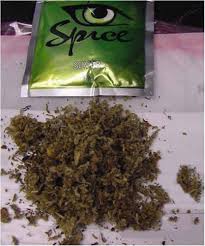
K2 has no equivalent quality control whatsoever. A clinical education resource describes the manufacturing reality bluntly: <cite index=”17-1″>one gram of “spice” can contain varying amounts of synthetic cannabinoid, with high variability from one package to another, and consumers do not know what active substance they are using, or in what dose.</cite> Making matters worse, the application process itself is inherently uneven — the same source notes that <cite index=”15-1″>even within individual packets, there may be different concentrations of chemical substances because the sprayed synthetic cannabinoids are not distributed evenly, leaving clumps or “hot spots” on the plant material.</cite>
This means two puffs from literally the same joint of K2 can deliver wildly different doses, something that has no real equivalent in the natural cannabis world. A federal health resource sums up the broader manufacturing problem: <cite index=”12-1″>there are no standards for making, packaging, or selling synthetic cannabinoid chemicals, meaning two packets of the same brand-named product may contain completely different chemicals, and the amount of synthetic cannabinoid can vary between batches or even within the same batch.</cite>
Contamination is another layer of risk unique to K2. Manufacturers have been known to add other active substances to boost effects or offset the sedating properties of the base compound. A clinical education resource notes that other ingredients are sometimes mixed in, including <cite index=”17-1″>the beta-2 agonist clenbuterol, which may be responsible for some of the rapid heart rate and other stimulant-like symptoms seen in spice intoxication, as well as large amounts of vitamin E, possibly added in an attempt to help the product evade detection.</cite>
There have also been documented cases of far more dangerous contamination — a toxicology resource describes an incident where <cite index=”19-1″>a synthetic cannabinoid tainted with brodifacoum, a long-acting anticoagulant rodenticide, caused an outbreak of synthetic cannabinoid-associated coagulopathy with four fatalities in Illinois in 2018.</cite> There is simply no equivalent risk profile in the natural cannabis supply chain, particularly in regulated markets.
Effects: Similar in Category, Different in Intensity and Character
Both THC and synthetic cannabinoids can produce feelings of relaxation, euphoria, and altered perception — that overlap is exactly why K2 was marketed as a marijuana substitute in the first place. But beyond that surface-level similarity, the character of the experience and the associated risks diverge substantially.
A comparison resource lays out the contrast: <cite index=”14-1″>natural marijuana contains THC, which binds with cannabinoid receptors in the brain to produce its psychoactive effects, while synthetic weed is composed of various man-made chemicals that also interact with these receptors but often much more intensely than THC does, resulting in an unpredictable array of side effects ranging from elevated mood and relaxation to severe agitation, hallucinations, and even life-threatening health crises.</cite>
The adverse effect profile associated with K2 use reads quite differently from what’s typically documented with natural cannabis. A poison control center resource lists the most common adverse effects seen specifically in adolescents using synthetic cannabinoids: <cite index=”16-1″>tachycardia (41.6%), drowsiness or lethargy (24.3%), agitation or irritability (16.4%), vomiting (13.1%), hallucinations or delusions (11.5%), nausea (8.5%), confusion (8.2%), hypertension (7.5%), chest pain (6.9%), and dizziness or vertigo (5.2%).</cite>
Severe reactions go well beyond what’s typically associated with cannabis use — a clinical toxicology resource notes that <cite index=”19-1″>clinical manifestations of toxicity from synthetic cannabinoids are unique and far more exaggerated than THC, including tachycardia, hypertension, profound alterations in mental status, psychosis, seizures, renal failure, and even ST-elevation myocardial infarction (a serious type of heart attack).</cite>
A comparison resource summarizes the broader risk gap: <cite index=”14-1″>synthetic cannabinoids tend to be far more potent than natural cannabis and have been linked with a number of serious adverse effects including acute kidney injury, myocardial infarction, and even death, outcomes which are rarely associated with natural cannabis use.</cite>
Route of administration also affects the risk profile differently depending on the substance. A state addiction resource notes that <cite index=”15-1″>if ingested, the effects of synthetic cannabinoids are more similar to those experienced from stimulants like amphetamines, and may include many potentially serious adverse effects, in contrast to the milder effects typically associated with cannabis.</cite>
Legal Status: A Patchwork vs. an Evolving but Clearer Framework
Cannabis legal status is, at this point, relatively well understood by most people: it’s fully legal for recreational or medical use in a growing number of states and countries, decriminalized in others, and still fully illegal in others — but the legal framework itself is stable and clearly defined wherever it exists. If a product is sold in a licensed dispensary, its legal status in that jurisdiction is unambiguous.
K2’s legal status is a genuinely different animal, largely because of the compound-by-compound “whack-a-mole” regulatory problem described earlier. A federal health resource notes that <cite index=”12-1″>many synthetic cannabinoids are illegal, with the federal government having banned many specific synthetic cannabinoids and many state and local governments passing their own laws targeting other synthetic cannabinoid compounds</cite> — but crucially, this is regulation by specific named chemical, not by category. Manufacturers have repeatedly exploited this gap.
Historically, sellers have also used a labeling trick to dodge regulation entirely. An encyclopedic reference notes that synthetic cannabinoid products <cite index=”18-1″>have been marketed as herbal incense or “herbal smoking blends” and are often labeled “not for human consumption” to support a liability legal defense,</cite> despite being sold and used specifically for their psychoactive effects. This kind of legal gray-zone marketing has no real parallel in the legitimate cannabis industry, where products are labeled and sold explicitly for their intended use.
Detectability: The Difference That Started It All
This comparison would be incomplete without addressing the issue that first drove much of K2’s popularity: drug testing. Standard drug panels are built and calibrated specifically to detect THC metabolites from natural cannabis use. Because synthetic cannabinoids are structurally different molecules, they generally don’t trigger a positive result on those same standard panels — a completely separate topic covered in more depth elsewhere, but worth mentioning here because it’s historically been one of the defining practical differences between the two substances in the eyes of users.
A poison control resource notes this directly as part of K2’s origin story: <cite index=”16-1″>synthetic cannabinoids became popular in the early 2000s in part due to their ability to escape detection by standard cannabinoid screening tests.</cite> A state health resource adds an important and sobering detail about how this detectability gap has been marketed: <cite index=”15-1″>marketing for synthetic cannabinoids has specifically targeted youth through enticing, playful packaging and messaging positioning these products as a cheaper alternative to cannabis that is not detected as easily in urine toxicology tests as THC.</cite>
It’s worth being direct about what this means: a meaningful part of K2’s appeal has never really been about it being a better drug experience than cannabis. It’s been about evading detection — which is a very different kind of “advantage,” and one that says nothing good about the safety of the product itself.
Dependence and Withdrawal
A clinical education resource notes <cite index=”17-1″>case reports have documented withdrawal symptoms after synthetic cannabinoid product use, as well as a dependence syndrome similar to those seen with cannabis,</cite> and interestingly, <cite index=”17-1″>some regular cannabis users have reportedly used synthetic cannabinoids as a substitute to relieve cannabis withdrawal symptoms, likely indicating some degree of cross-tolerance between the two substance classes.</cite>
Who’s Actually Using K2, and Why It Matters
The demographic and usage patterns around K2 differ from cannabis in ways that reflect its unique risk profile. A state health resource notes that <cite index=”15-1″>estimates suggest 4.5 to 13.5% of high school students, varying by geography, report lifetime use of synthetic cannabinoids, compared to about 29% reporting lifetime cannabis use alone</cite> — meaning K2 use, while less common than cannabis use overall, still represents a meaningful minority of teen substance use.
More concerning is where the medical fallout concentrates: <cite index=”15-1″>youth aged 12 to 29 represent the largest age group of emergency room visits related to synthetic cannabinoid intoxication, and severe neurological effects like seizures or coma are more commonly seen in youth using synthetic cannabinoids compared to those using cannabis only.</cite>
This age skew connects directly back to the detectability and marketing issues raised earlier — synthetic cannabinoids have historically been positioned, packaged, and priced in ways that specifically appeal to younger users and to people in testing-heavy environments (military service members, people under legal supervision, certain workplaces), which helps explain why the demographic and risk patterns look so different from cannabis use more broadly.
A Side Note: Don’t Confuse K2 With Legal Hemp-Derived Cannabinoids
It’s worth clearing up a point of genuine confusion here, because the terminology can get muddled. Products like delta-8-THC, which have become widely available through the legal hemp market, are sometimes lumped in with “synthetic cannabinoids” in casual conversation — but they are not the same category as K2 at all. Delta-8-THC is a real cannabinoid isomer, chemically converted from hemp-derived CBD through a lab process, but it remains structurally a genuine THC molecule with a well-characterized relationship to delta-9-THC. As one resource notes, <cite index=”10-1″>it’s important to distinguish synthetic cannabinoids like K2/Spice from naturally occurring cannabinoids like delta-8-THC and other minor cannabinoids, because consuming designer drugs like K2 can be dangerous in ways that cannabis-derived cannabinoids are not.</cite>
Side-by-Side Summary
| THC / Natural Cannabis | K2 / Spice (Synthetic Cannabinoids) | |
|---|---|---|
| Source | Naturally occurring plant compound | Lab-synthesized designer chemicals sprayed on inert plant material |
| Chemical structure | One well-defined molecule (delta-9-THC) | Hundreds of distinct, frequently changing chemical compounds |
| Receptor activity | Partial agonist at CB1/CB2 receptors | Typically full agonist at CB1/CB2 receptors |
| Potency at receptors | Baseline reference point | Estimated 2–800x more potent, depending on compound |
| Dosing consistency | Testable, generally consistent (especially in regulated markets) | Highly inconsistent, uneven distribution, “hot spots” within packages |
| Standard drug test detection | Reliably detected by standard THC panels | Generally not detected by standard THC panels |
| Typical adverse effects | Anxiety, paranoia, impaired coordination (usually mild, rarely life-threatening) | Seizures, psychosis, rapid heart rate, kidney injury, occasionally fatal |
| Legal status | Increasingly legal/regulated in many jurisdictions | Patchwork, frequently shifting, often exploits regulatory gaps |
| Contamination risk | Regulated markets test for contaminants | Frequently contaminated with other active substances |
The Bottom Line
K2/Spice and THC products share a superficial resemblance — both are smoked or consumed for a cannabis-like high, and both act on the same cannabinoid receptors in the brain. But that’s essentially where the similarity ends. THC is a single, well-studied plant compound that acts as a partial agonist, with a manufacturing and regulatory ecosystem (at least in legal markets) built around consistency and testing. K2 is a constantly shifting category of full-agonist synthetic chemicals, manufactured with no quality control, frequently contaminated, dramatically more potent and unpredictable, and linked to a far more severe range of medical emergencies.


