
Uncategorized
Why Is K2 Called ‘Spice’?
Jul
Table of Contents
If you’ve spent any time reading about synthetic cannabinoids, you’ve probably noticed that the same drug gets called by two very different names — K2 and Spice — often used interchangeably, sometimes in the same sentence. It’s a small mystery that trips up a lot of people encountering this topic for the first time. Why does a drug with one basic identity have two totally unrelated brand names? Why does one sound like a mountain and the other sound like something you’d find in a spice rack?
This piece traces both names back to their origins — where “K2” came from, where “Spice” came from, how they became generic terms for an entire drug category, and what that naming history reveals about how synthetic cannabinoids spread around the world.
Two Names, One Drug Category
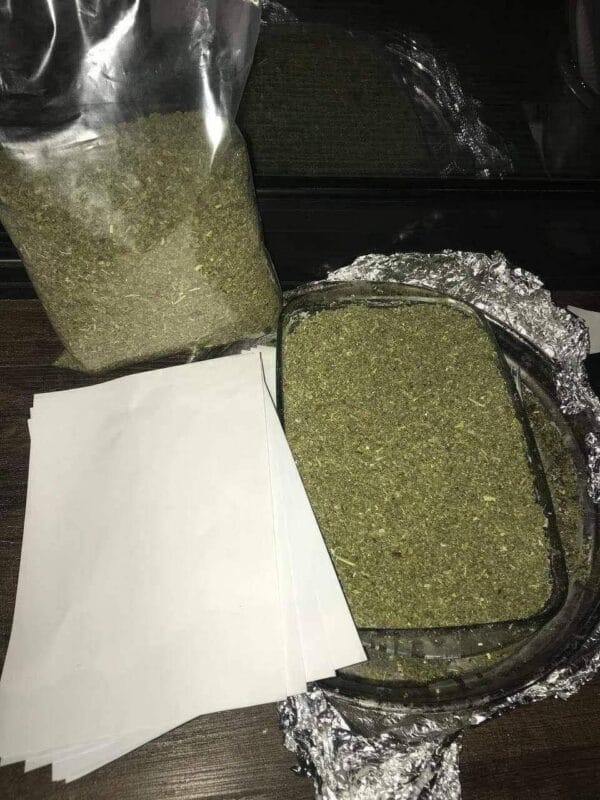
Before digging into etymology, it helps to clarify what’s actually being named. K2 and Spice are not different chemicals. They’re brand names — trademarks, in effect — that were originally attached to specific commercial products containing synthetic cannabinoids: lab-made chemical compounds sprayed onto plant material and sold as a legal alternative to marijuana.
Out of that crowded field of brand names, two rose above the rest and became the generic terms most people actually use: K2 and Spice. Understanding why requires looking at where each name was first coined — and it turns out they emerged independently, an ocean apart, before eventually merging into shorthand for the same broad category of drug.
Where “Spice” Came From
The name “Spice” has the earlier and, in some ways, more clearly documented origin story.
<cite index=”16-1″>A British company called The Psyche Deli launched the “Spice” brand in London in 2004</cite>. <cite index=”18-1″>Synthetic marijuana sold as “Spice” first appeared in Europe in that year, several years before it showed up in the United States</cite>. The Psyche Deli marketed Spice as an herbal smoking blend — packaged attractively, sold as incense, and positioned as a legal, seemingly benign product you could pick up in shops that catered to cannabis culture without actually containing cannabis.
The German Discovery
<cite index=”14-1″>The first analyses of Spice-brand products were conducted in Germany in December 2008</cite>. One study used high-performance liquid chromatography and gas chromatography-mass spectrometry — standard techniques for identifying unknown chemical compounds — <cite index=”14-1″>to identify a compound called JWH-018 in herbal incense products including “Spice Gold,” “Yukatan Fire,” and “Arctic Synergie”</cite>. A second German research team ran similar tests on other product variants sold under names like “Spice Silver.”
What they found solved the mystery of why a product marketed as herbal incense was getting people high in ways that mimicked marijuana. There was no cannabis in it at all. Instead, the plant material had been coated in a synthetic chemical compound that activated the same receptors in the brain that THC does — but wasn’t derived from the cannabis plant, wasn’t chemically related to THC, and wasn’t covered by existing drug laws that specifically targeted cannabis and its natural derivatives.
That compound was JWH-018, and its own name has an origin story worth knowing, because it connects directly to how “K2” came into existence on the other side of the Atlantic.
The Name Becomes Generic
This is a familiar pattern in the history of consumer products and drugs alike: a specific brand becomes so associated with a category that the brand name eclipses the generic term for the product itself. Just as people ask for a “Kleenex” regardless of the actual tissue brand in the box, drug users and, eventually, journalists, doctors, and regulators started saying “Spice” to refer to the entire category of herbal-incense-packaged synthetic cannabinoids, not just the original UK product.
Where “K2” Came From
The origin of this name is more literal and, frankly, a little unexpected for a drug: <cite index=”14-1″>K2 is named after the second-highest mountain on Earth</cite>. K2, the actual mountain, sits on the border between Pakistan and China in the Karakoram range and is famous among climbers as an even more technically dangerous ascent than Mount Everest, despite being slightly shorter.
Why a synthetic drug manufacturer chose to name their herbal incense blend after a notoriously difficult and dangerous mountain isn’t documented in detail in the historical record, but the branding logic tracks with a broader trend in “legal high” marketing at the time: names evoking adventure, extremity, danger, or exoticism were common across the synthetic drug market, likely intended to appeal to a customer base drawn to novelty and edge.
K2’s American Debut
While Spice was first identified and analyzed in Europe, <cite index=”14-1″>use of synthetic cannabinoid products rose dramatically in the United States starting around 2010</cite>, and K2 became the name most strongly associated with the phenomenon domestically.
<cite index=”17-1″>Synthetic cannabinoids laced onto plant material were first reported in the U.S. in December 2008, when a shipment of “Spice” was seized and analyzed by U.S. Customs and Border Protection in Dayton, Ohio</cite>. So even in the U.S., the earliest documented seizure was technically labeled “Spice” — but as the domestic market for these products exploded over the following two years,
<cite index=”14-1″>The first mention of K2 by the National Forensic Laboratory Information System, a nationwide network that tracks drugs seized by law enforcement, appeared as a request for information regarding “Spice” in its 2008 annual report. By 2009, the system had identified only 15 cases of products containing synthetic cannabinoids.
That number exploded to 2,977 cases across 32 states the following year</cite> — a staggering hundred-fold increase in a single year, concentrated especially in the Midwest and South. It was around this period of explosive growth that “K2” cemented itself as the dominant American term, even as “Spice” remained (and remains) common usage as well, especially internationally.
The Chemistry Behind Both Names: JWH-018 and the Clemson Connection
This chemical wasn’t invented by either The Psyche Deli or whoever first branded K2. <cite index=”13-1″>It came from the lab of John W. Huffman, a chemistry professor at Clemson University in South Carolina, whose initials — J, W, and H — became the naming convention for an entire family of experimental compounds he synthesized</cite>. <cite index=”18-1″>JWH-018 and the other compounds in the JWH series were created in 1995</cite>, decades before anyone was smoking them recreationally.
Huffman’s research had nothing to do with getting people high. <cite name=”13-1″>He was studying the cannabinoid receptor system for legitimate pharmacological research purposes, and JWH-018 was simply the eighteenth compound his lab synthesized in that line of work</cite>.
The jump from academic curiosity to street drug happened, according to Huffman’s own account, when <cite index=”13-1″>researchers discovered that one of his lab’s compounds had turned up in a product called Spice</cite>. <cite index=”13-1″>Some chemist — likely operating overseas — appears to have taken Huffman’s published recipe directly from the scientific literature, mass-produced the compound, likely in China, and distributed it around the world as the active ingredient in herbal incense products</cite>.
<cite index=”16-1″>Huffman has been vocal in condemning the products sold under labels like “Spice,” warning that their health implications were never fully appreciated by the people using them</cite>, and reportedly gave a talk to a professional cannabinoid research group titled “JWH-018 — A Good Compound Gone Bad,” reflecting his own discomfort at seeing a research tool turned into a widely abused street drug.
Why “Not for Human Consumption”?
Both names — K2 and Spice — were attached to products marketed under a curious and legally strategic label: “not for human consumption.” Understanding why illuminates a lot about how both brands managed to spread as widely and quickly as they did before governments caught up.
<cite index=”14-1″>This label specifically helped these products avoid the reach of the Federal Analogue Act of 1986, a law which states that a controlled substance analogue shall only be treated as a controlled substance “to the extent intended for human consumption.”</cite>
By printing “not for human consumption” on the package — even while everyone in the supply chain understood exactly what the product was actually used for — manufacturers and retailers created a paper-thin legal shield that delayed prosecution and regulation for years.
<cite index=”11-1″>This kind of marketing was, in practice, nothing more than a means to make dangerous, psychoactive substances widely available to the public</cite> while dodging the legal consequences that would normally apply to selling an intoxicating drug.
The Geography of Manufacturing
<cite index=”11-1″>The vast majority of synthetic cannabinoids have been manufactured in Asia, without any manufacturing requirements or quality control standards, and the bulk products are typically smuggled into destination countries as misbranded imports with no legitimate medical or industrial use</cite>.
This meant that a bag labeled “K2” purchased at a gas station in Ohio and a bag labeled “K2” purchased a year later might have been produced by completely different, unaffiliated manufacturers overseas, using different chemical formulations, with the only consistent thread being the marketing name printed on the package.
The Chemical Cat-and-Mouse Game
The generic drift of both names accelerated because of an ongoing chemical arms race between drug manufacturers and regulators, which is worth understanding because it explains why “K2” and “Spice” have remained relevant terms for over a decade and a half despite dozens of law changes targeting specific compounds.
<cite index=”18-1″>In 2010, the U.S. Drug Enforcement Administration used emergency powers to place several of the original synthetic cannabinoid compounds under control, and in 2012, a law was passed banning many of the substances found in synthetic marijuana products</cite>.
That law was the Synthetic Drug Abuse Prevention Act, <cite index=”17-1″>part of the FDA Safety and Innovation Act, signed by President Obama, which permanently placed 26 types of synthetic cannabinoids and cathinones into Schedule I of the Controlled Substances Act</cite>.
<cite index=”13-1″>In the years since JWH-018 was first identified in Spice, more than 500 new synthetic drugs have been identified, as clandestine chemists have continued mining scientific and patent literature for candidate compounds, tweaking their molecular structure just enough to stay a step ahead of drug scheduling laws</cite>.
This is precisely why “K2” and “Spice” persisted as umbrella terms rather than being retired along with any single banned chemical. Whatever new molecule hit the market, sold under a familiar-sounding brand or a brand-new one, it would still get lumped under the same two generic names by users, journalists, and even law enforcement — because functionally, from a consumer’s perspective, it was still “that stuff sold as herbal incense that gets you high like weed.”
Why the Name Stuck Even After the Original Products Vanished
Part of the explanation is simple linguistic momentum. Once a term becomes generic — again, think “Kleenex,” “Band-Aid,” or “Hoover” — it tends to persist in common usage long after the specific product that spawned it has disappeared from shelves. Public health agencies, poison control centers, news outlets, and law enforcement all needed a consistent shorthand for referring to this broad and shifting category of drugs, and by the early 2010s, K2 and Spice were already so entrenched in public consciousness that switching to a more chemically precise term (like “synthetic cannabinoid receptor agonists,” the technical designation) would have been confusing to the public they were trying to warn.
There’s also a practical reason rooted in how these drugs were sold: <cite index=”20-1″>in the early 2000s, synthetic cannabinoids became popular partly because of their ability to escape detection by standard cannabinoid drug screening tests</cite>.
A Tragic Turning Point: How the Names Reached Wider Public Awareness
One case in particular is often cited as a turning point in U.S. legislative history. In June 2010, an American teenager named David Mitchell Rozga died by suicide in Indianola, Iowa, after reportedly using K2 with friends approximately an hour beforehand.
The nature of his death, combined with accounts from family and friends, led investigators and eventually lawmakers to focus specifically on K2 as a contributing factor. His death directly influenced political momentum against the drug, leading Iowa Senator Chuck Grassley to introduce what became known as the “David Mitchell Rozga Act,” aimed at banning the use and distribution of K2, which passed Congress in June 2011 and helped set the stage for the broader federal ban that followed in 2012.
K2, Spice, and the Broader Naming Pattern in Drug Culture
The K2/Spice naming story fits into a much longer pattern of how street drugs get named — a pattern driven far more by marketing, geography, and cultural accident than by any scientific logic.
Consider how many other drugs get their common names: from slang terms with murky origins, to nicknames based on appearance or effect, to brand names that eclipse generic pharmaceutical or chemical names entirely.
This is different from a drug like heroin, whose common name actually derives from a former trademark (Bayer’s original brand name for diacetylmorphine), or cocaine, whose name derives directly from its botanical source, the coca plant. K2 and Spice sit somewhere in between: real brand names, born from real marketing decisions by real companies, that outlived their original corporate owners and became the informal, universally recognized vocabulary for describing an entire, ever-shifting category of synthetic drugs.
Why the Names Persist in Public Health Messaging
<cite index=”19-1″>Synthetic cannabinoids, commonly known by the name of “Spice” or “K2,” first became available in the U.S. in the mid-2000s</cite>, and public health messaging has largely stuck with this vocabulary in the years since, layering in newer street names as they emerge — <cite index=”19-1″>terms like AK47, Incense, Fake Weed, Yucatan Fire, Genie, Skunk, Moon Rocks, Zohai, and Black Mamba</cite> have all circulated as sub-brands or regional nicknames, but K2 and Spice have remained the two umbrella terms doctors, researchers, and journalists reach for when they need to describe the category as a whole.
Summing Up the Two Origin Stories
Pulling the two threads together:
“Spice” began as a specific commercial brand launched by a British company in London in 2004, built initially around a synthetic cannabinoid compound (JWH-018) that had been lifted from academic research and mass-produced overseas. After the original company shut down around 2009, the name became a generic term for the entire category of herbal-incense synthetic cannabinoid products, used especially widely in Europe.
Both names, despite arising independently, ended up describing the same underlying phenomenon: plant material sprayed with ever-changing synthetic chemical compounds designed to activate the brain’s cannabinoid receptors, sold under a rotating cast of consumer-friendly brand names, and shielded from regulation for years by a “not for human consumption” label that fooled no one who was actually buying the product.
A Note on Naming and Risk
There’s a broader lesson buried in this naming history that’s worth drawing out explicitly: both “K2” and “Spice” were deliberately chosen, market-tested brand names, crafted by people trying to sell a product — not neutral scientific descriptions of what the product actually contained or did to the people using it.
Names like “Spice,” evoking something exotic and pleasant, or “K2,” evoking adventure and mountaineering prestige, were part of a broader marketing strategy that also included attractive foil packaging, labels boasting things like “herbal” and “natural,” and a “not for human consumption” disclaimer designed more to dodge prosecution than to warn anyone away from actual use.
That gap between the marketing and the underlying chemical reality — a reality involving unregulated, constantly shifting, often highly potent synthetic compounds manufactured with no quality control — is itself worth remembering any time a new “legal high” appears on the market under an appealing, unthreatening brand name. The pleasant-sounding label was never a reliable guide to what was actually inside the package, and that mismatch is baked into the very origin story of how these two names came to dominate the conversation about synthetic cannabinoids in the first place.
This article is intended for general educational and historical purposes and does not constitute medical advice.


