Uncategorized
Are There Legal Alternatives to K2?
Jul
Table of Contents
If you’ve been using K2 — or thinking about it — and you’re now looking for something that gets you into similar territory without the legal risk, the chemical roulette, or the genuinely alarming health track record, that’s a really good instinct. The good news is yes, there are legal alternatives that don’t carry anywhere near the same risk profile. The slightly more complicated news is that “legal” doesn’t automatically mean “safe,” and some of the products marketed right alongside K2 in the same gas stations and smoke shops deserve just as much scrutiny.
First, a Quick Reminder of Why K2 Is a Problem in the First Place
Before getting into alternatives, it’s worth being clear about what makes K2 specifically risky, since that’s the yardstick everything else should be measured against.
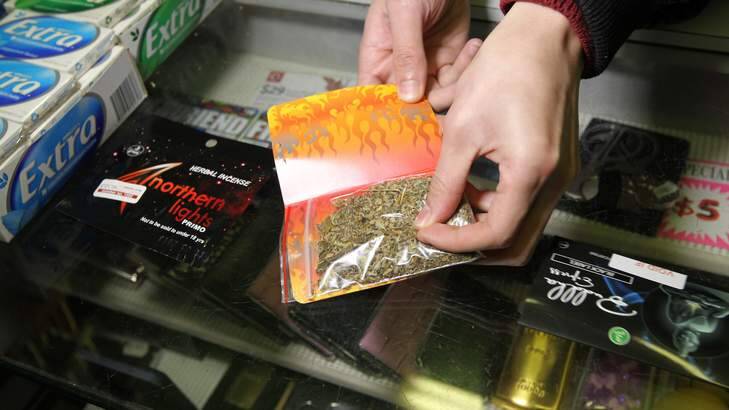
K2 (also called Spice) isn’t cannabis in any real sense. As one comparison resource puts it, it’s <cite index=”21-1″>a lab-created chemical compound sprayed onto plant material, with zero relation to the cannabis plant and no federal safety oversight.</cite> A hemp industry resource frames the core issue plainly: <cite index=”27-1″>K2 and Spice are just two examples of products in a class of drugs commonly referred to as synthetic cannabinoids… they are made from a mixed variety of plant material that has been sprayed with human-made chemicals.</cite>
The danger isn’t just that it’s unregulated — it’s that the chemistry keeps shifting under everyone’s feet. The same resource notes <cite index=”27-1″>manufacturers reportedly need only to tweak the chemical structure slightly to make it legally a different product, and with frequent changes, the laws have had a difficult time keeping up,</cite> while <cite index=”27-1″>the amount of chemical sprayed over the plant material can also be inconsistent, which can make it difficult for a consumer to know how much they are taking.</cite>
So the bar for a “legal alternative” isn’t just “won’t get me arrested.” It’s “won’t put me in the emergency room from a batch that’s ten times stronger than the one I used last week.”
Delta-8 THC: The Most Common Alternative, With Real Caveats
What it actually is. Unlike K2’s synthetic compounds, Delta-8 is a real cannabinoid. One comparison resource explains that <cite index=”21-1″>Delta-8 THC is a naturally occurring cannabinoid found in hemp plants, regulated under the 2018 Farm Bill, and chemically converted from CBD in controlled laboratory environments.</cite>
The molecular difference from the THC found in regular cannabis is tiny — one hemp industry source describes it as <cite index=”27-1″>the location of a double bond on the chain of carbon atoms… Delta-8 THC has the double bond on the 8th carbon chain, Delta-9 THC has it on the 9th.</cite> That’s genuinely the whole difference, and it’s part of why some people describe it as feeling like a milder version of a regular cannabis high.
Where the caveats come in. This is the part worth taking seriously. A health resource quotes a researcher describing the core problem: <cite index=”25-1″>”When you have unregulated products being sold at gas stations, head shops, grocery stores — outside of a dispensary setting — the products tend to become dangerous because there’s no oversight on how they’re made, what the ingredients are, and if they’re sterile.”</cite>
This isn’t a hypothetical concern — a university study cited in the same article found that <cite index=”25-1″>of the 27 delta-8-THC products analyzed, none contained the amount of this compound listed on the label.</cite> The same source notes both federal agencies have weighed in, with the <cite index=”25-1″>CDC issu[ing] a health advisory in September 2021, pointing to an increase in adverse events related to these products,</cite> and the FDA warning that <cite index=”25-1″>delta-8 THC products have not been evaluated or approved by the FDA for safe use in any context.</cite>
One more thing worth knowing: Delta-8 is not invisible to drug testing the way K2 often is. A wellness resource notes that <cite index=”28-1″>Delta-8 THC, though federally legal, metabolizes into compounds that standard drug tests detect, making it a risk for professionals facing screening.</cite> If avoiding a positive drug test was part of your reason for considering K2 in the first place, Delta-8 doesn’t solve that problem — a standard THC panel is generally built to catch it.
Other Hemp-Derived Cannabinoids Worth Knowing About
Delta-8 isn’t the only legal cannabinoid on the market, and depending on what you’re actually looking for, some of the others might be a better fit.
HHC (hexahydrocannabinol). A cannabinoid guide describes this as <cite index=”22-1″>a hydrogenated cannabinoid produced from hemp-derived CBD through a catalytic hydrogenation process,</cite> generally landing somewhere <cite index=”22-1″>comparable to Delta-8 for most users.</cite>
CBD, CBG, and CBN. For anyone who wants the general “wellness” appeal without any intoxicating effect at all, these non-psychoactive cannabinoids are the more conservative choice. A cannabinoid resource notes <cite index=”28-1″>research shows CBD offers analgesic, anticonvulsant, and anxiolytic benefits without psychoactive effects,</cite> while CBG is described as <cite index=”28-1″>the “mother cannabinoid,” supporting balance and ease.</cite>
Legal Delta-9 THC (in states where it’s allowed). If you live somewhere with legal recreational or medical cannabis, this is genuinely the most straightforward and best-tested option available — a regulated product from a licensed dispensary, with lab-verified potency, none of the synthetic chemical uncertainty of K2, and none of the mislabeling problems that plague the unregulated hemp market.
Non-Cannabinoid “Legal Highs” You’ll See Marketed Alongside K2
One retailer’s lineup, for example, includes options like <cite index=”23-1″>hemp-derived CBD gummies… Mad Honey (a food product, legal in all 50 states), Blue Lotus (uncontrolled, legal in all 50 states), and legal mushroom gummies formulated without psilocybin.</cite> These occupy a genuinely different category from synthetic cannabinoids — they’re not chemically related to THC at all, and the specific safety profile of each one varies quite a bit, so it’s worth researching any unfamiliar product on its own terms rather than assuming “legal” automatically means “well-understood.”
The Catch: “Legal” and “Safe” Are Not the Same Word
Here’s the part of this conversation that matters most, and it applies just as much to Delta-8 as it did to K2: legality tells you almost nothing about safety when a product category is this loosely regulated.
A psychology and addiction resource lays out the scope of the problem bluntly, describing this whole category as <cite index=”30-1″>”gas-station weed” because of retail availability… [with] almost zero restrictions/oversight despite producing similar effects to marijuana.</cite> The same source found that lab analysis of commercial products regularly turns up surprises: <cite index=”30-1″>an article in Cannabis and Cannabinoid Research analyzed 56 CBD gummy products and revealed that 39% contained delta-9-THC… and 5% contained delta-8-THC. In addition, 70% of the products contained CBD in a concentration differing by 10% from that reported on packaging labels.</cite>
Perhaps most relevant to this whole conversation: the same resource notes some products marketed as “safe alternatives” are barely distinguishable from K2 itself, observing that <cite index=”30-1″>these semi-synthetic cannabinoids, along with some fully synthetic cannabinoids — they bear names like Spice, K2, Delta 8, Delta 10, and Zaza — are increasingly implicated in pediatric and adult emergency encounters.</cite> That’s worth sitting with: some products sold under “legal alternative” branding aren’t meaningfully safer than K2 at all. They’re just marketed better.
So How Do You Actually Tell a Reasonable Alternative From a Repackaged Problem?
Given everything above, here’s a practical framework for separating a genuinely lower-risk option from something that’s just K2 with better marketing.
Ask for a Certificate of Analysis (COA), and actually read it. A hemp product comparison resource lays out exactly what to look for: <cite index=”21-1″>request the certificate of analysis (COA) before purchase. A legitimate COA lists the testing lab’s name, shows cannabinoid potency (Delta-8, Delta-9, CBD), and includes results for pesticides, heavy metals, and residual solvents. It should also state ‘ND’ (non-detect) for synthetic cannabinoids.</cite> The same source is direct about what to do if a seller can’t produce one: <cite index=”21-1″>if the retailer cannot provide a COA or the report does not specify an ISO 17025 accredited lab, do not purchase the product.</cite>
Prioritize licensed dispensaries over gas stations and novelty shops. If you’re in a state with legal cannabis, a licensed dispensary selling actual Delta-9 THC products is almost always a safer bet than an unregulated hemp product sold at a convenience store, precisely because dispensary products go through mandated testing that gas-station products generally don’t.
Don’t assume “hemp-derived” automatically means “well-tested.” As covered above, mislabeling in this specific market is common enough that independent lab studies have found products routinely don’t match their own label.
If avoiding a positive drug test matters to you, know that most legal cannabinoids won’t help with that. Delta-8, Delta-9, and most hemp-derived THC isomers will generally register on a standard THC panel. If that’s your primary concern, a cannabinoid-based alternative isn’t actually solving the problem you’re trying to solve — and it’s worth being honest with yourself about why avoiding that particular test matters so much in the first place.
What If You’re Trying to Get Off K2 Entirely, Not Just Find a Substitute?
If quitting K2 altogether is the actual goal, that’s a conversation worth having with a doctor or addiction specialist rather than trying to self-manage with substitute products. Nothing in this post is a replacement for that kind of professional support, particularly given how unpredictable K2 withdrawal can be.
The Bottom Line
Yes, there are legal alternatives to K2 — and the good ones are genuinely, meaningfully different from K2 in terms of chemistry, consistency, and risk. Real cannabinoids like Delta-8, Delta-9 (where legal), HHC, and CBD come from an actual, known molecular family, rather than the ever-shifting soup of synthetic compounds behind K2. But “legal” in this market is a much lower bar than most people assume, and some products sold right next to K2 under similarly vague “legal high” branding carry a lot of the same risks. The real safeguard isn’t the word “legal” on the label — it’s actual lab testing, a legitimate seller, and a clear-eyed understanding of what you’re putting in your body, regardless of what the packaging promises.


