
SYNTHETIC SPRAY
What Is Synthetic Cannabinoid Spray? The Complete Educational Guide
May
Table of Contents
Introduction
Among the many forms in which synthetic cannabinoids — the dangerous class of man-made chemicals commonly known as K2, Spice, or synthetic marijuana — are produced and distributed, the liquid spray format represents one of the most adaptable, most difficult to detect, and in many ways most alarming delivery mechanisms in circulation today.
Synthetic cannabinoid spray is exactly what the name suggests: a solution of synthetic cannabinoid chemicals dissolved in a liquid solvent — typically acetone, alcohol, or another organic compound — that can be sprayed, painted, or dripped onto any absorbent surface. Most commonly, that surface is plant material (to create the herbal incense products that defined the early synthetic cannabinoid market) or paper (to create the K2-laced paper discussed extensively in public health and correctional contexts). But the liquid format means it can theoretically be applied to almost any material, which is what makes it particularly challenging for security personnel, healthcare providers, educators, and families trying to protect the people they care about.
Understanding synthetic cannabinoid spray — what it is, how it is made, how it is used, why it is so dangerous, who encounters it, and what can be done about it — is essential knowledge for anyone working in public health, education, law enforcement, healthcare, or community advocacy, and for any family member trying to understand a crisis that may have entered their lives without warning.
This guide provides that understanding comprehensively, honestly, and with the rigor that this serious public health topic demands. It is written not to sensationalize but to inform — because accurate information, widely shared, is one of the most powerful tools available for reducing the harm these substances cause.
Part One: What Is Synthetic Cannabinoid Spray?
The Chemistry Behind the Spray
Synthetic cannabinoid spray is a preparation in which one or more synthetic cannabinoid compounds are dissolved in a volatile organic solvent to create a liquid solution. The most commonly used solvents include acetone (nail polish remover), isopropyl alcohol, ethanol, and other readily available organic compounds. The resulting liquid can range from completely clear and water-like to slightly colored or oily in appearance, depending on the specific compounds and solvents used.
The synthetic cannabinoid compounds themselves — the pharmacologically active ingredients that produce the psychoactive effects — are typically colorless or white crystalline powders at room temperature. When dissolved in solvent, they become invisible within the solution, which is one of the characteristics that makes the spray format so problematic from a detection standpoint.
When the spray is applied to a surface and the solvent evaporates — which typically takes only minutes in ambient conditions — the synthetic cannabinoid compounds remain behind on the surface, essentially bound to whatever material has absorbed them. The result is a surface that looks, feels, and often smells exactly like the untreated material, but that contains active synthetic cannabinoid compounds distributed across its surface.
This is the fundamental mechanism behind both herbal incense products (where the spray is applied to dried plant material) and K2-laced paper (where the spray is applied to ordinary paper). The spray format is the production method that enables both of these delivery vehicles.
The Origins of Spray-Based Production
When synthetic cannabinoid products first appeared commercially in the mid-2000s, production was relatively crude — dried herbs were mixed with or soaked in synthetic cannabinoid solutions in ways that were inefficient and produced inconsistent distribution of the active compounds. As the industry evolved — driven both by commercial interests and by pressure from law enforcement and regulatory agencies — production became more sophisticated.
The spray application method emerged as the dominant production approach for herbal incense products because it offered apparent advantages over cruder mixing methods: better coating of the plant material, more efficient use of the synthetic cannabinoid compounds, and the ability to scale production. Commercial-scale herbal incense production operations — some of which have been identified and shut down by law enforcement in various countries — used spray application equipment ranging from simple hand-operated spray bottles to industrial spray coating machinery.
The same spray technology that enabled commercial herbal incense production also enabled the application of synthetic cannabinoids to paper and other surfaces, which became a separate and particularly serious distribution pathway as detection and interdiction of packaged herbal incense products improved.
What the Spray Contains: The Compound Landscape
One of the most important and most alarming things to understand about synthetic cannabinoid spray is the diversity and constant evolution of the compounds it may contain. There is no single “synthetic cannabinoid spray.” There are hundreds of possible formulations, each using one or more of the hundreds of synthetic cannabinoid compounds that have been identified by forensic and public health laboratories worldwide.
These compounds span multiple chemical families — the JWH series (named for researcher John W. Huffman, who originally synthesized many of them for legitimate research purposes), the AM series, the UR-144 and XLR-11 compounds, the AB-PINACA and AB-FUBINACA families, MDMB-CHMICA, and many others. Each generation of compounds tends to be more potent than the last, as manufacturers optimize for substances that produce effects at smaller quantities and are harder to detect through standard screening methods.
A piece of paper treated with synthetic cannabinoid spray, or a packet of herbal incense, may contain any of these compounds — or a mixture of several. The consumer has no way of knowing which compounds are present, at what concentrations, or what their specific effects and risks are. Most of these compounds have never been tested in humans in any formal clinical setting. Their pharmacology, toxicology, and safety profiles are largely unknown before they appear in emergency rooms.
Part Two: How Synthetic Cannabinoid Spray Is Produced and Distributed
DIY Production: The Accessibility Problem
One of the most troubling aspects of synthetic cannabinoid spray is how accessible its production is to individuals without specialized chemistry knowledge or equipment. The basic process — dissolving synthetic cannabinoid powder in an organic solvent and applying the resulting solution to a substrate — requires no specialized laboratory equipment, no advanced chemical training, and no materials that are not widely commercially available.
Detailed production instructions have been widely shared on internet forums, dark web platforms, and through encrypted messaging applications. Synthetic cannabinoid compounds themselves — the raw chemical ingredients — can be purchased from chemical supply companies in several countries with limited regulatory oversight, and have historically been available for purchase online. While regulatory efforts have restricted this market in many jurisdictions, availability through international suppliers remains an ongoing challenge.
The low barriers to entry for production mean that synthetic cannabinoid spray is not exclusively produced by large-scale commercial operations. Individual producers — operating out of homes, apartments, or small facilities — can and do produce treated paper, treated herbal material, and liquid spray solutions for local or regional distribution. This decentralized production landscape makes it significantly harder for law enforcement to disrupt the supply chain than it would be for substances requiring sophisticated manufacturing infrastructure.
Commercial-Scale Production
At the other end of the production spectrum, commercial-scale synthetic cannabinoid operations have been identified and prosecuted in multiple countries. These operations have used industrial spray coating equipment to treat large quantities of herbal material efficiently, producing standardized-appearing packages sold through retail channels including gas stations, convenience stores, head shops, and online platforms.
Law enforcement agencies in the United States, the United Kingdom, Germany, Poland, and other countries have seized production facilities with significant quantities of synthetic cannabinoid compounds, solvents, spray equipment, packaging materials, and finished products. The scale of some of these operations — with seizures measured in kilograms of raw synthetic cannabinoid compounds and thousands of finished packets — illustrates the commercial dimensions of this market.
The prosecution of commercial operations has displaced some production offshore, with finished products and raw compounds increasingly imported from countries with less developed regulatory frameworks. This international dimension complicates enforcement significantly.
Distribution Channels
Synthetic cannabinoid spray reaches consumers through several distinct channels:
Retail products: Packaged herbal incense products containing spray-applied synthetic cannabinoids have been sold in gas stations, tobacco shops, head shops, and online retailers, particularly in markets and time periods where specific compounds were not yet legally prohibited. While sustained regulatory and enforcement pressure has significantly reduced this open retail availability in many jurisdictions, it has not eliminated it entirely.
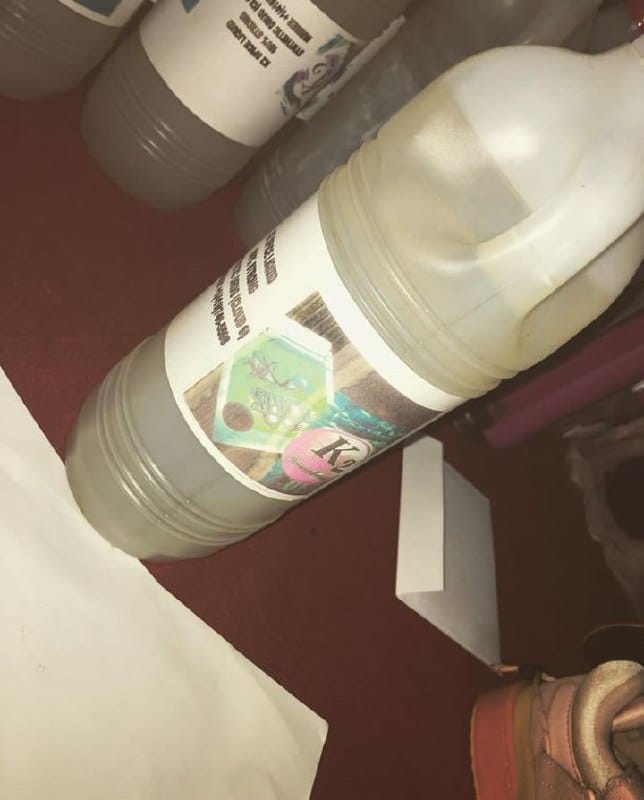
Illicit direct distribution: Liquid synthetic cannabinoid spray — sold in small vials or dropper bottles — is distributed through illicit channels including online dark markets, encrypted messaging platforms, and informal dealer networks. Purchasers use this liquid to treat their own paper, plant material, or other substrates.
Pre-treated paper: Perhaps the most significant distribution channel in terms of harm caused, pre-treated paper — ordinary-looking sheets or pages that have been coated with synthetic cannabinoid solution — is distributed through mail into correctional facilities, schools, and residential programs. The paper appears completely normal and passes through many forms of security screening without detection.
Pre-treated products disguised as legitimate goods: Synthetic cannabinoid solution has been applied to a range of products beyond paper and herbal material, including coloring pages, bookmarks, greeting cards, puzzle pages, and other items that appear entirely innocuous and can be mailed into controlled environments as apparently legitimate correspondence or gifts.
Part Three: The Pharmacology of Synthetic Cannabinoid Spray — Why It Is So Dangerous
The Endocannabinoid System and How Synthetic Cannabinoids Exploit It
To understand why synthetic cannabinoid spray is so dangerous, you need to understand both the biological system it targets and how synthetic cannabinoids interact with that system in ways that are fundamentally different from — and far more dangerous than — natural cannabis.
The human endocannabinoid system (ECS) is a complex cell-signaling network found throughout the body and brain. It plays crucial roles in regulating mood, pain sensation, appetite, memory, immune function, sleep, and many other physiological processes. The ECS operates through two primary receptor types: CB1 receptors (found primarily in the brain and central nervous system) and CB2 receptors (found primarily in immune tissues).
The body produces its own endocannabinoids — naturally occurring signaling molecules including anandamide and 2-AG — that activate these receptors in controlled, precisely regulated ways. THC, the primary psychoactive compound in natural cannabis, produces its characteristic effects by binding to CB1 receptors. Critically, THC is a partial agonist of CB1 — it activates the receptor incompletely, leaving a pharmacological margin of safety. This partial agonism is part of why, despite cannabis carrying its own risk profile, fatal overdose attributable purely to THC is extraordinarily rare.
Synthetic cannabinoids do something fundamentally different. Most synthetic cannabinoids are full agonists of CB1 receptors — they activate the receptor to its maximum possible capacity. Where THC engages the receptor gently and incompletely, synthetic cannabinoids slam it to full activation. This difference in receptor engagement — partial versus full agonism — translates directly into dramatically more intense, less predictable, and more dangerous effects.
Compounding the full agonism problem is the question of potency. Many synthetic cannabinoid compounds are dramatically more potent than THC — meaning that a much smaller quantity produces equivalent or greater receptor activation. Some synthetic cannabinoids have been measured at 10 times, 50 times, 100 times, or even greater potency than THC at the receptor level. This extraordinary potency is what makes the hot spot problem in spray-treated materials so acutely dangerous: microgram-level differences in concentration — invisible to the naked eye — can be the difference between mild intoxication and a life-threatening overdose.
The Specific Dangers Created by the Spray Format
Beyond the inherent dangers of synthetic cannabinoids themselves, the spray format creates specific additional risks that compound the overall danger profile.
Uneven distribution and hot spots: When a synthetic cannabinoid solution is sprayed onto paper or plant material, the distribution of the active compound across the treated surface is rarely uniform. Surface tension, absorption rates, spray pattern, and drying dynamics all contribute to uneven distribution — some areas receiving far higher concentrations than others. These hot spots of concentrated synthetic cannabinoid compound are invisible and cannot be identified without sophisticated chemical analysis. A person who smokes or consumes a portion of a hot spot may receive a dose dramatically larger than they anticipated or experienced previously.
Concentration variability between batches: Because synthetic cannabinoid spray is produced without the quality controls that regulate pharmaceutical manufacturing, the concentration of active compounds varies between production batches. A piece of paper or a packet of herbal material that appears identical to a previously used product may contain a completely different compound at a completely different concentration.
Compound instability: Some synthetic cannabinoid compounds are chemically unstable and degrade over time, particularly when exposed to heat, light, or oxygen. Degradation products — the breakdown chemicals created as the original compound degrades — may themselves be pharmacologically active and potentially toxic, meaning that the effects of consuming synthetic cannabinoid-treated material change as the material ages.
Synergistic compound interactions: Some producers use mixtures of multiple synthetic cannabinoid compounds in their spray solutions. The interactions between these compounds — some of which may have synergistic effects at the receptor level — add another layer of unpredictability to the effects experienced by the consumer.
Documented Health Consequences
The health consequences of synthetic cannabinoid exposure — through sprayed herbal material, laced paper, or other spray-treated substrates — are well-documented across medical literature, emergency medicine case series, and public health surveillance data. They span a spectrum from moderately unpleasant to life-threatening.
Cardiovascular effects: Tachycardia (rapid heart rate), cardiac arrhythmias (irregular heart rhythms), hypertension (high blood pressure), chest pain, and — in documented cases including young, otherwise healthy individuals — myocardial infarction (heart attack) and cardiac arrest. The cardiovascular effects of synthetic cannabinoids are among the leading causes of death associated with their use.
Neurological effects: Seizures (in people with no prior history of seizure disorders), stroke, loss of consciousness, and coma. Seizures may occur as a direct effect of the synthetic cannabinoid compound, as a consequence of the metabolic disruption caused by toxicity, or in the context of withdrawal in dependent users.
Psychiatric effects: Acute psychosis (including hallucinations, paranoid delusions, and severe disorganized thinking), severe anxiety and panic attacks, agitation, and aggression. These psychiatric effects can persist for hours to days beyond the period of direct drug effect, and in some vulnerable individuals, a single exposure has triggered prolonged psychotic episodes requiring intensive inpatient psychiatric treatment.
Renal effects: Acute kidney injury — sometimes severe enough to require dialysis — has been documented in clusters of synthetic cannabinoid users, associated with specific compounds that appear to have direct nephrotoxic (kidney-damaging) properties beyond their effects on cannabinoid receptors.
Respiratory effects: Respiratory depression, difficulty breathing, and — in the most severe cases — respiratory failure requiring mechanical ventilation.
Death: Synthetic cannabinoids have caused documented deaths in countries around the world, through the mechanisms described above — cardiac events, respiratory failure, seizure complications, accidents during psychosis, and violence during psychotic episodes.
Part Four: Synthetic Cannabinoid Spray in Specific Contexts
In Correctional Facilities
The correctional facility context represents the environment where synthetic cannabinoid spray has caused the most documented and concentrated harm. The mechanism is primarily through spray-treated paper sent via mail, as discussed in detail in previous articles in this series. The key dynamics in this setting are worth reiterating in the context of the spray format specifically.
The spray format is what enables K2-laced paper to exist at all. Without the ability to dissolve synthetic cannabinoid compounds into a sprayable liquid, the application of these compounds to paper at scale would not be practical. Understanding that the spray is the enabling technology helps explain why addressing the paper-based distribution problem requires thinking about the spray itself — its production, its availability, and the supply chains that deliver raw synthetic cannabinoid compounds to the people who produce laced paper.
In correctional settings, the spray format has also been encountered in other substrates beyond paper. Synthetic cannabinoid solution has been detected in stamps, envelopes, drawings, Bible pages, legal documents, and other materials sent through the mail system. The versatility of the spray format — its ability to be applied to virtually any absorbent surface — is precisely the characteristic that makes it so difficult to counter with conventional mail screening.
In Schools and Youth Settings
In school environments, synthetic cannabinoid spray is most commonly encountered in one of two forms: as a liquid purchased or obtained by students for personal use (to apply to herbal material for smoking), or as a component of laced paper that enters schools through student networks.
The youth-facing dimension of the synthetic cannabinoid spray problem is particularly alarming because of the specific vulnerability of developing brains to the neurotoxic and psychiatric effects of powerful psychoactive substances. The adolescent brain — which continues developing into the mid-twenties — is particularly susceptible to disruption by compounds that interfere with endocannabinoid signaling, which plays important roles in normal brain development.
The availability of DIY production information online, combined with the availability of synthetic cannabinoid compounds through certain online suppliers, means that some young people have attempted to produce their own sprayed products. The risks of home production — uncontrolled concentration, unknown compound identity, inadequate safety precautions with the solvents used — add additional layers of danger to an already hazardous substance.
In Community and Public Settings
The public health impact of synthetic cannabinoid spray extends beyond the controlled environments of correctional facilities and schools into broader community settings. The mass overdose events that have attracted significant media attention in cities across the United States, the United Kingdom, and elsewhere — scenes of multiple people simultaneously incapacitated in public spaces — are often associated with spray-treated herbal products distributed through illicit street markets.
These events place enormous demands on emergency medical services and public health infrastructure. A single mass overdose event involving a potent synthetic cannabinoid compound can require the simultaneous response of multiple ambulances, emergency room resources, and public health crisis management — resources that are then unavailable for other emergencies occurring at the same time.
Among People Who Use Other Substances
Synthetic cannabinoid spray products have been encountered within the broader landscape of illicit substance use, where they may be used by people who are primarily users of other substances — sometimes knowingly, sometimes not. There have been documented cases of synthetic cannabinoids being added to other substances without the knowledge of the consumer, either as an adulterant or as a deliberate deception.
This adulteration risk means that the warning signs and health consequences of synthetic cannabinoid exposure are relevant not only to people who intentionally seek out these products but to anyone in an environment where illicit substance use occurs.
Part Five: Detection and Identification
Why Detection Is So Difficult
The detection of synthetic cannabinoid spray — whether in a liquid solution, on treated paper, or on treated herbal material — presents significant challenges that have outpaced the development of comprehensive detection tools.
Visual inspection: Provides no useful information. Treated paper looks identical to untreated paper. Treated herbal material looks identical to untreated herbal material. There is typically no color change, no visible residue, and no obvious alteration of the substrate.
Smell: Many synthetic cannabinoid compounds have little or no distinctive odor at the concentrations used in spray applications. Some solvent residue may produce a faint chemical smell in the immediate aftermath of application, but this fades rapidly as the solvent evaporates. Trained drug-detection dogs are effective for many substances but face ongoing challenges with synthetic cannabinoids, particularly newer compounds for which specific training has not yet been developed.
Standard drug testing: Standard immunoassay drug screens — including the widely used 5-panel and 10-panel urine drug tests — do not detect synthetic cannabinoids. These tests use antibodies calibrated to detect THC metabolites and other specific drug compounds; synthetic cannabinoid metabolites are chemically distinct and do not trigger these tests. A person who has been exposed to synthetic cannabinoid spray will typically test negative on a standard drug screen.
Available Detection Technologies
Specialized detection technologies do exist and are being increasingly deployed in high-risk settings, though their availability remains uneven and their comprehensiveness is limited by the constantly evolving synthetic cannabinoid compound landscape.
Ion mobility spectrometry (IMS): Technology widely used in airport security for explosive detection has been adapted for drug detection including some synthetic cannabinoids. IMS devices can provide rapid field screening of surfaces and materials, but their sensitivity and specificity for synthetic cannabinoids varies by compound and requires regular updating of the substance libraries as new compounds emerge.
Chemical colorimetric test kits: Specific colorimetric field tests for synthetic cannabinoids have been developed and are available for purchase by correctional facilities, law enforcement agencies, and other institutions. These tests use chemical reagents that produce a color change in the presence of specific synthetic cannabinoid compound families. They provide a rapid field result but are limited to the compound families they have been designed to detect and may produce false negatives for newer, structurally distinct compounds.
Mass spectrometry: Laboratory-based mass spectrometry — particularly liquid chromatography-tandem mass spectrometry (LC-MS/MS) and high-resolution mass spectrometry (HRMS) — provides the most sensitive and comprehensive detection capability. These methods can identify specific synthetic cannabinoid compounds and their metabolites with high specificity and can potentially detect novel compounds not yet in standard screening panels. However, they require sophisticated laboratory infrastructure, trained personnel, and significant time — making them unsuitable for rapid field screening.
Immunoassay panels for synthetic cannabinoids: A growing number of clinical and forensic laboratories offer immunoassay screening panels specifically designed to detect common synthetic cannabinoid metabolites in urine and blood samples. These panels have expanded coverage compared to standard drug tests but remain limited to the compounds whose metabolites they have been calibrated to detect.
The Compound Lag Problem
All detection technologies face a fundamental challenge: the synthetic cannabinoid compound landscape evolves faster than detection systems can be updated. Each time a new compound is identified, validated, and incorporated into detection systems — whether dog training programs, field test kits, or laboratory analytical methods — the manufacturers of synthetic cannabinoid spray have typically already moved on to the next structural variant.
This compound lag creates persistent windows of undetectability for the newest synthetic cannabinoid formulations. In correctional settings, this means that a facility that has implemented comprehensive synthetic cannabinoid screening may still be vulnerable to laced paper containing the most recently introduced compounds, for which no detection capability yet exists.
Addressing the compound lag problem requires investment in real-time surveillance systems that can rapidly identify newly emerging compounds, accelerated development and deployment of updated detection tools, and international information-sharing between forensic laboratories, public health agencies, and law enforcement bodies.
Part Six: The Legal and Regulatory Landscape
Scheduling and Prohibition
In the United States, many synthetic cannabinoid compounds are classified as Schedule I controlled substances under the Controlled Substances Act, pursuant to the Synthetic Drug Abuse Prevention Act of 2012 and subsequent emergency and permanent scheduling actions by the Drug Enforcement Administration. The Federal Analogue Act provides additional coverage for substances substantially similar in chemical structure or pharmacological effect to already-scheduled compounds.
However, the scheduling of specific compounds has been persistently outpaced by chemical modification. Manufacturers who slightly alter a scheduled compound’s molecular structure can, at least temporarily, produce a substance that is technically distinct from scheduled compounds and therefore not immediately subject to the same prohibition. This chemical evasion strategy has been a central feature of the synthetic cannabinoid market since its inception.
Some jurisdictions have attempted to address this with broader, class-based approaches — banning all substances with cannabinoid receptor agonist activity above a certain threshold, or all substances that are substantially similar to known synthetic cannabinoids, or (as in the UK’s Psychoactive Substances Act 2016) all psychoactive substances not specifically exempted. These broader approaches reduce but do not eliminate the chemical evasion options available to manufacturers.
Legal Consequences
The manufacture, distribution, and possession of scheduled synthetic cannabinoid compounds — including in spray form, in treated paper, and in herbal incense products — carries serious criminal consequences in most jurisdictions. Penalties vary by jurisdiction and specific circumstances but can include substantial prison sentences, particularly for commercial-scale manufacturing and distribution operations.
In the correctional facility context, introducing synthetic cannabinoid spray or treated materials through the mail constitutes introducing contraband into a correctional facility — a serious criminal offense in all jurisdictions regardless of the specific substance involved, and one that carries additional penalties related to the controlled substance content.
Families should understand that being used — even unknowingly — as a conduit for synthetic cannabinoid-laced mail into correctional facilities carries potential legal consequences. Ignorance of the contents is a defense, but not an automatic one, and the legal situation can be complex. Anyone who suspects they may have been used in this way should consult a qualified attorney.
International Dimensions
The global nature of synthetic cannabinoid production and distribution complicates regulatory responses significantly. Raw synthetic cannabinoid compounds and finished spray solutions have been produced in and imported from countries including China, India, and others with varying degrees of regulatory oversight and enforcement. International postal systems handle billions of parcels, a small fraction of which can be inspected. Law enforcement agencies in various countries have cooperated on synthetic cannabinoid investigations, but the international coordination required for effective interdiction remains a work in progress.
Part Seven: What Communities, Institutions, and Families Can Do
For Correctional and Residential Facilities
Facilities that have identified synthetic cannabinoid spray as a threat to their population should implement layered responses rather than relying on any single detection or prevention measure:
Mail management protocols: The most effective current approach for preventing laced paper from entering facilities is mail photocopying — scanning or copying all incoming mail and delivering only the copy. Because the synthetic cannabinoid compounds are on the original paper, the copy contains no active substance. This approach has been implemented in correctional facilities in multiple countries and has demonstrated effectiveness at reducing laced paper entry. Implementation requires attention to legal considerations around mail privacy and confidentiality of legal correspondence.
Staff training and awareness: Staff who understand how to recognize the behavioral signs of synthetic cannabinoid intoxication — and who know that standard drug tests will not detect these substances — are better equipped to respond effectively to incidents. Training should be updated regularly as the clinical picture of synthetic cannabinoid toxicity evolves.
Enhanced medical protocols: Facilities should ensure that medical staff are familiar with the clinical presentation of synthetic cannabinoid toxicity, have access to appropriate emergency medications, and have clear protocols for escalating to external emergency services when events exceed internal capacity.
Education for incarcerated people: Harm reduction-informed education about the specific dangers of synthetic cannabinoid spray — the hot spot problem, the compound variability, the unpredictability of outcomes — delivered in a non-judgmental way, may reduce use by people who genuinely underestimate the risks.
For Healthcare Providers and First Responders
Healthcare providers and emergency responders need to maintain a high index of suspicion for synthetic cannabinoid toxicity in patients presenting with unexplained severe agitation, psychosis, cardiovascular distress, or seizures — particularly in populations and geographic areas where synthetic cannabinoid use is known to occur.
The critical clinical reminder: a negative standard drug screen does not rule out synthetic cannabinoid toxicity. If synthetic cannabinoid exposure is suspected, contact the regional poison control center for current compound-specific guidance and to access whatever specialized testing capabilities may be available in your region.
Treatment is supportive — managing the airway, stabilizing cardiovascular function, controlling seizures and agitation with benzodiazepines, monitoring for organ damage, and providing appropriate psychiatric evaluation and support. There is no antidote for synthetic cannabinoid toxicity.
For Educators and Schools
Schools in communities where synthetic cannabinoid use is known or suspected among young people should ensure that staff are trained to recognize the warning signs of synthetic cannabinoid intoxication, that student drug testing programs — where used — include synthetic cannabinoid-specific panels, and that student health and counseling resources include professionals with specific knowledge of synthetic cannabinoid risks and treatment.
Prevention education should be accurate, specific, and non-alarmist. Young people who understand precisely what synthetic cannabinoid spray is — that it is a laboratory chemical of unknown composition and unpredictable potency, not an herbal supplement — and who understand the specific mechanisms by which it causes harm, are better equipped to make informed decisions than those who have received only generic substance use messaging.
For Families
Families whose loved ones are in environments where synthetic cannabinoid spray may be encountered — correctional facilities, residential programs, schools, street communities — can protect those loved ones and themselves most effectively by:
Being informed: Understanding what synthetic cannabinoid spray is, how it enters different settings, and what the warning signs of exposure look like puts you in the best possible position to recognize a problem and respond effectively.
Communicating openly: Having honest, specific conversations with loved ones about the dangers of synthetic cannabinoid spray — calibrated to their age, their setting, and their specific risk factors — is one of the most protective things a family member can do.
Recognizing manipulation: Being alert to signs that a loved one in a correctional facility may be under pressure to facilitate the introduction of synthetic cannabinoid materials — unusual requests for specific mail formats, unusual urgency around mail, requests to send materials to non-standard addresses.
Knowing when and how to seek help: If you believe a loved one has been exposed to synthetic cannabinoid spray and is experiencing symptoms, emergency services should be contacted without delay. The National Poison Control Center (1-800-222-1222 in the United States) is available 24 hours a day for guidance on both emergency situations and non-emergency questions.
Part Eight: The Broader Public Health Response
Surveillance and Data
Effective public health responses to synthetic cannabinoid spray require robust surveillance systems capable of rapidly identifying new compounds and outbreak events. Several mechanisms contribute to this surveillance:
Poison control center data: Poison control centers receive calls about synthetic cannabinoid exposures and can identify geographic clustering and temporal trends that signal emerging problems.
Emergency department surveillance: Systematic collection of data on emergency department visits associated with synthetic cannabinoid toxicity — including biological samples for toxicological analysis — provides early warning of new compounds and changing use patterns.
Forensic laboratory networks: Sharing of analytical data on compounds identified in seized materials between forensic laboratories — nationally and internationally — accelerates identification of newly emerging synthetic cannabinoid formulations.
Community-based surveillance: Outreach workers, harm reduction programs, and community health workers in contact with populations at highest risk for synthetic cannabinoid use can provide ground-level intelligence about emerging products and use patterns.
Harm Reduction
Harm reduction approaches — which meet people where they are rather than requiring abstinence as a precondition for engagement — have demonstrated value in reducing drug-related harms across many substance use challenges, and their application to synthetic cannabinoid use is increasingly recognized as important.
For synthetic cannabinoid spray specifically, harm reduction approaches include: accurate, non-judgmental information provision about specific risks (including the hot spot problem and compound variability) to people who are currently using; access to emergency response resources; engagement with people who use synthetic cannabinoids as partners in surveillance (reporting new products and adverse events); and integration with broader support services including housing, mental health, and addiction treatment.
Research Needs
The synthetic cannabinoid spray landscape evolves faster than the research literature can track it. Critical research needs include: faster analytical methods for identifying novel synthetic cannabinoid compounds; better understanding of the pharmacology and toxicology of the hundreds of synthetic cannabinoid compounds currently in circulation; clinical studies of synthetic cannabinoid withdrawal and optimal detoxification approaches; evaluation of prevention and harm reduction interventions in the specific contexts where synthetic cannabinoid spray is most problematic; and longitudinal studies of the long-term health consequences of synthetic cannabinoid exposure.
Conclusion: Why This Matters and What It Demands of All of Us
Synthetic cannabinoid spray is a technology of harm. It exists because someone discovered that dissolving man-made chemicals into a liquid and applying them to ordinary surfaces created a product that could produce intense intoxication while evading detection, circumventing regulation, and deceiving consumers about its true nature. It has caused mass suffering — psychosis, seizures, cardiac emergencies, kidney failure, death — in populations that are already among the most vulnerable: people in correctional facilities, young people in schools, homeless individuals in public spaces, people in treatment trying to recover.
The response to this technology of harm must be proportional to the harm it causes. That means investment in better detection tools. It means regulatory frameworks sophisticated enough to address chemical evasion. It means healthcare systems prepared to recognize and treat synthetic cannabinoid toxicity even when standard tests produce negative results. It means correctional and residential facilities with the knowledge, protocols, and resources to protect the people in their care. It means education programs that tell the truth about what synthetic cannabinoid spray is and what it does — specifically, honestly, and without the kind of alarmist exaggeration that causes young people to tune out.
And it means families, educators, healthcare providers, and community members who are informed enough to recognize the warning signs, confident enough to act on what they observe, and connected enough to the right resources to get help when it is needed.
The spray looks like nothing. The harm it causes is very real. And closing the gap between appearance and reality — that work belongs to all of us.


